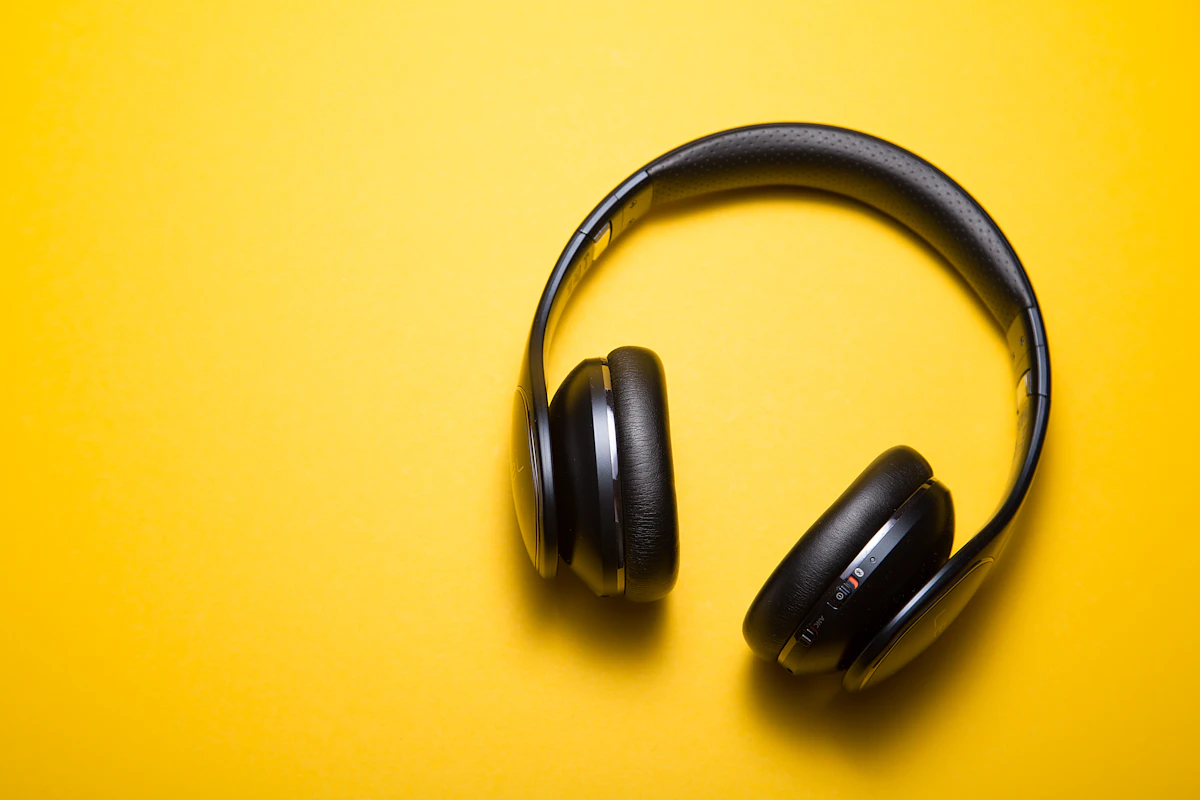
Hi-Fi Sound at Home: Which Streaming Platform Actually Sounds Best?
Published: February 19, 2026 | OnlyCodes Editorial
The short answer
Tidal and Apple Music are the two platforms worth considering if sound quality is your priority. Tidal offers the highest available resolution (up to 24-bit/192kHz), but Apple Music delivers lossless audio at no extra cost with its standard subscription. Spotify still does not offer true lossless, despite years of promising it.
If you are building or upgrading a hi-fi system and wondering which streaming service to pair it with, this guide breaks down the actual technical differences, not the marketing claims, plus everything you need to know about pricing, retailers, bank card stacking, and telco bundles across Singapore.
What "hi-fi" actually means in streaming
Most people stream music at compressed quality without realizing it. Here is the hierarchy:
Standard quality (lossy): 128 to 256 kbps AAC or OGG. This is what Spotify Free and most default settings deliver. Fine for earbuds on a commute. Not fine for a proper speaker setup.
High quality (lossy): 320 kbps. Spotify Premium maxes out here. Better, but still compressed. On a decent pair of bookshelf speakers, the difference between 320 kbps and lossless is audible, especially in acoustic music with complex layering.
Lossless (CD quality): 16-bit/44.1kHz (1,411 kbps). This is what a CD delivers. Apple Music, Tidal, Amazon Music, and Qobuz all offer this tier. The file is not compressed in a way that loses information.
Hi-Res lossless: 24-bit/96kHz or 24-bit/192kHz. This is where Tidal HiFi Plus and Qobuz shine. Whether human ears can consistently distinguish Hi-Res from standard lossless is debated, but on a quality DAC and speakers, many listeners report a noticeable improvement in spatial detail and dynamics.
Platform comparison
Tidal HiFi Plus
- Resolution: Up to 24-bit/192kHz (FLAC, with legacy MQA support)
- Monthly cost: US$10.99 global benchmark
- Catalogue: 110 million plus tracks
- Regional availability: Available in Singapore (availability may vary)
Apple Music
- Resolution: Up to 24-bit/192kHz (ALAC)
- Monthly cost: US$10.99 global benchmark
- Catalogue: 100 million plus tracks
- Regional availability: Available in Singapore
Spotify Premium
- Resolution: Up to 320 kbps OGG Vorbis
- Monthly cost: US$10.99 global benchmark
- Catalogue: 100 million plus tracks
- Regional availability: Available in Singapore
Amazon Music Unlimited
- Resolution: Up to 24-bit/192kHz (FLAC)
- Monthly cost: US$10.99 (US$9.99 for Prime members)
- Catalogue: 100 million plus tracks
- Regional availability: Singapore primarily, limited elsewhere
Qobuz
- Resolution: Up to 24-bit/192kHz (FLAC, no MQA)
- Monthly cost: US$12.99 to US$14.99
- Catalogue: 100 million plus tracks
- Regional availability: Not available in any Asian market
Pricing, Deals and Where to Buy in Singapore
Here is the full breakdown of streaming costs, telco bundles, bank card stacking strategies, and hi-fi retailers for Singapore as of early 2026.
Streaming subscriptions (monthly, individual plan):
- Apple Music: S$10.98
- Spotify Premium: S$10.98
- Tidal HiFi Plus: S$29.98
- Amazon Music Unlimited: S$10.98 (S$8.98 for Prime members)
- YouTube Music Premium: S$10.98
- Singtel Cast bundles Spotify Premium with selected mobile plans for S$0 to S$5 extra monthly.
- StarHub occasionally bundles Spotify with 5G plans during promo windows.
- M1 has no music streaming bundle at this point.
- DBS Live Fresh: 5 percent cashback on online subscriptions, capped monthly.
- UOB One Card: 5 percent cashback on all streaming subscriptions when you hit the S$500 category spend.
- Citi Cash Back+: 1.6 percent flat on streaming, no cap.
- HSBC Everyday Global Debit: 1 percent on subscriptions.
- Stereo Electronics (Adelphi, Coleman Street): KEF, DALI, Marantz, Cambridge Audio authorized dealer.
- AV One (Adelphi): Naim, Audiolab, Bluesound, Chord Electronics.
- Audio House (Liang Court): Broader audio retailer, consumer-friendly pricing.
- Jaben (headphone specialist): Sennheiser, Focal, HiFiMan, Sony XM series.
- Lazada SG and Shopee SG: Cambridge Audio, Marantz, iFi Audio, Topping official stores.
What hardware do you actually need?
A streaming subscription alone does not make your music sound better. The chain matters:
Source: The streaming app on your phone, laptop, or a dedicated streamer (Bluesound Node, WiiM Pro Plus).
DAC (Digital to Analog Converter): This converts the digital stream into an analog signal. Your phone has a built-in DAC. It is not good enough for hi-fi. A dedicated DAC (iFi Zen DAC, Topping DX5, or Chord Mojo 2) makes a real difference. Budget around S$150 to S$600.
Amplifier: Powers your speakers. Integrated amps like the Marantz PM6007 or Cambridge Audio CXA81 handle both amplification and DAC duties. Budget S$600 to S$1,500.
Speakers: Bookshelf speakers are the practical choice for most apartment-sized homes in the region where space is limited. The KEF LS50 Meta, DALI Oberon 3, and Wharfedale Diamond 12.2 are all excellent in the S$700 to S$1,800 range.
For a complete entry-level hi-fi setup, expect to spend S$1,500 to S$3,000 total. The streaming subscription is the cheapest part of the chain.
Phone and DAC Compatibility
How you connect matters as much as what you connect to.
- iPhone 15/16/17 (USB-C): Works with any USB-C DAC. Native lossless via wired connection. AirPods Max are lossy over Bluetooth but go lossless when wired via USB-C since iOS 17.
- iPhone 14 and older (Lightning): Needs a Lightning-to-USB adapter or a Lightning DAC like the iFi Go bar or AudioQuest DragonFly with an Apple Camera Connection Kit.
- Android (USB-C): Most Android phones support USB Audio Class 2.0 output. Samsung Galaxy, Google Pixel, Xiaomi, and Oppo flagships all work with standalone USB-C DACs. Check that your streaming app routes to the external DAC rather than phone speakers.
- Bluetooth codecs: LDAC (Sony) and aptX Lossless (Qualcomm) approach lossless quality wirelessly, but only when both the source and headphones support the codec. Check compatibility before assuming.
Headphones or Speakers First?
For most buyers starting out in an apartment setting, headphones are the smarter first investment. They are not limited by room acoustics, they work at any time of day, and a good pair under S$800 outperforms speakers at 2 to 3 times the price.
- Sony WH-1000XM6 (S$549) for wireless convenience with LDAC support.
- Sennheiser HD 600 or HD 650 (S$600 to S$800) for open-back wired listening.
- Focal Bathys (S$1,299) for premium wireless with aptX Adaptive.
- HiFiMan Sundara (S$450) for planar magnetic on a budget.
The bottom line
If you are serious about sound quality and live anywhere in Asia, Apple Music is the best starting point. Lossless at no extra cost, Spatial Audio, wide availability, and it works well with affordable DACs. If you want the absolute best resolution and do not mind a slightly higher price, Tidal HiFi Plus is the audiophile pick (where available).
Skip Spotify for hi-fi listening. It is great for discovery and playlists, but the audio quality ceiling is too low for a proper setup.
Whatever platform you choose, invest in a dedicated DAC before upgrading anything else. It is the single biggest improvement you can make for under S$300.
FAQ
Is lossless audio worth it if I use Bluetooth headphones? No. Bluetooth compresses audio to fit within its bandwidth. Even LDAC, the highest quality Bluetooth codec, caps at 990 kbps, well below CD quality at 1,411 kbps. Lossless audio only matters through a wired connection or a USB DAC. If you listen exclusively over Bluetooth, you will not hear the difference between Spotify Premium at 320 kbps and Apple Music lossless.
Which streaming platform has the best local music catalogue for listeners in the region? Spotify has the broadest regional catalogue across the region. JOOX is strong for Cantopop and Thai pop. Zing MP3 is the best for Vietnamese music. For Indonesian dangdut and pop, both Spotify and JOOX have deep catalogues.
Do I need an expensive DAC to hear a difference? No. Entry-level DACs like the iFi Zen Air DAC (around S$99) or the Apple USB-C dongle (under S$20) already outperform most built-in phone and laptop DACs. The jump from built-in to a dedicated DAC is far more noticeable than the jump from a S$100 DAC to a S$500 one.
Can I share a streaming subscription with family across different countries? Family plans from Apple Music and Spotify require all members to reside in the same country for billing. If your family spans multiple countries, each person needs a separate individual plan. Tidal has similar restrictions.
You Might Also Like
- The 10 Best Mobile Games Right Now
- Best Gig Bags and Cases for Traveling Musicians 2026: 5 Tested for Flight Travel and Daily Wear
- How to Travel With Your Guitar in 2026: Cases, Airlines, and What Actually Survives Long-Haul Flights
OnlyCodes Deals
- Lazada - Audio & Electronics Deals | Get Deal
- Shopee - Hi-Fi Audio Deals | Get Deal
- Amazon - DACs, Amplifiers & Speakers | Get Deal
- Samsung - Galaxy Buds & Audio Gear | Get Deal
---
OnlyCodes may earn a commission when you purchase through our links. This does not influence our recommendations.