The Short Answer
Central and Admiralty are the safest bet if your meetings are in the financial district and you want walkable nightlife. Tsim Sha Tsui is better value with a livelier night scene but adds 15 minutes to your CBD commute. Wan Chai is the sweet spot - close enough to Central for business, close enough to everything else for after hours.
How Hong Kong's Areas Actually Work
Hong Kong is tiny but its neighbourhoods feel like different cities. The harbour splits everything into two: Hong Kong Island (south) and Kowloon (north). The MTR connects them in 5 minutes, but that 5 minutes matters when you are running late to a morning meeting.
Hong Kong Island is where most financial and professional services firms sit. Central, Admiralty, and Wan Chai form the business corridor. This is where you will spend your days if you work in banking, consulting, law, or corporate.
Kowloon is denser, louder, and more affordable. Tsim Sha Tsui (TST) faces the island across the harbour. It is the most popular area for tourists and increasingly for business travellers who want better hotel rates without sacrificing access.
Central and Admiralty: The Default Business Choice
During the day: This is Hong Kong's Wall Street. The IFC tower, Exchange Square, Cheung Kong Center - every major bank and law firm has offices here. You can walk between meetings. Lunch is expensive but efficient - the IFC mall food court and the endless restaurants in the LANDMARK complex keep things moving. The Mid-Levels escalator takes you uphill to quieter cafes if you need a break.
At night: Central transforms after dark. Lan Kwai Fong is the famous bar street - loud, packed, and touristy but undeniably fun for a first visit. For something more refined, SoHo (south of Hollywood Road) has wine bars, cocktail spots, and proper restaurants. Sheung Wan, a 10-minute walk west, is where the locals eat - less polished but better food.
Stay here if: Your meetings are in Central, you want to walk to work, and you do not mind paying a premium. Expect $1,500-3,000 HKD per night for a business-standard hotel.
Skip if: You are price-sensitive or want a more authentic Hong Kong experience after hours.
Hotels to consider: The Mandarin Oriental (iconic, directly in Central), the Murray (quieter, beautifully renovated), Island Shangri-La (Admiralty, slightly better value). Compare rates on Agoda before booking direct.
Wan Chai: The Smart Compromise
During the day: Wan Chai is one MTR stop from Admiralty and two from Central - 5 minutes door to door. The Hong Kong Convention and Exhibition Centre is here, making it ideal for conference attendees. The area around Hennessy Road has a growing number of co-working spaces. It is less corporate than Central, which some people prefer.
At night: This is where Wan Chai wins. Star Street is a hidden cluster of excellent restaurants, wine bars, and independent shops that most tourists never find. Lockhart Road has the rowdier bars. And you are a 10-minute walk from Causeway Bay - the beating heart of Hong Kong's shopping and food scene, alive until midnight every night.
Stay here if: You want the best balance of business access and after-hours energy. Wan Chai hotels are 20-40% cheaper than Central for comparable quality.
Skip if: You need to be in Central before 8am every morning and hate commuting, even for 5 minutes.
Hotels to consider: Renaissance Hong Kong Harbour View (convention centre attached), The Fleming (boutique, beautifully designed), Novotel Century (solid value). Agoda frequently has flash deals on Wan Chai properties - worth checking before your trip.
Tsim Sha Tsui (TST): Best Value and Best Views
During the day: TST is across the harbour on the Kowloon side. If your meetings are on Hong Kong Island, you are adding 10-15 minutes each way via MTR or the Star Ferry. That said, many companies in logistics, shipping, trade, and retail have Kowloon offices around TST and Hung Hom. The ICC tower in nearby West Kowloon is a major business hub.
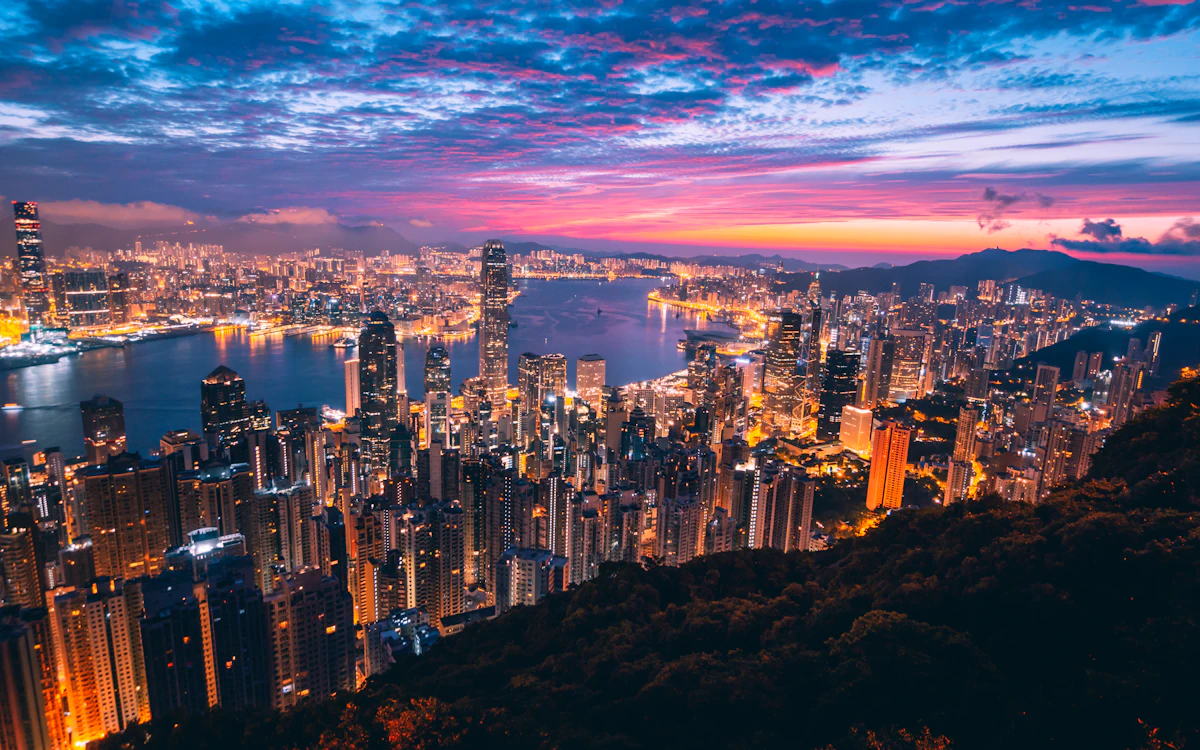
At night: TST is arguably the best area in Hong Kong after dark. The harbourfront promenade gives you the most photographed skyline in Asia. Behind the waterfront, the streets around Knutsford Terrace and Ashley Road are packed with restaurants spanning every cuisine. The night markets on Temple Street in nearby Jordan are a 10-minute walk. And unlike Central, TST stays alive on weeknights - it does not rely on the Friday finance crowd.
Stay here if: You want better hotel rates, a livelier neighbourhood, and do not mind a short MTR ride to the island. Especially good if your meetings are in Kowloon.
Skip if: Every meeting is in Central and you value walking to work above everything else.
Hotels to consider: The Peninsula (legendary, harbourfront), Hotel ICON (modern, excellent value for what you get), Hyatt Regency (solid business choice). TST consistently shows 20-30% lower rates on Agoda versus Central equivalents.
Causeway Bay: The Night Owl's Base
During the day: Not a natural business base - it is 3-4 MTR stops from Central. But if your meetings are scattered across the island or you work in retail, media, or creative industries, Causeway Bay has energy that Central lacks. Plenty of cafes to work from, fast WiFi everywhere.
At night: This is where young Hong Kong lives. Times Square, Hysan Place, and the streets behind them are packed with restaurants, bubble tea shops, izakayas, and late-night noodle places. It is less polished than Central and much less touristy than TST. If you want to eat incredibly well for under $100 HKD, Causeway Bay delivers.
Stay here if: You prioritise food and nightlife over proximity to the financial district. Good for longer stays where you want a neighbourhood to settle into.
Hotels to consider: The Park Lane (classic, overlooking Victoria Park), Tuve (tiny boutique, very design-forward), Mini Hotel Causeway Bay (budget-friendly, clean).
Practical Tips for Business Travellers
How to Book Hotels in Hong Kong
Agoda consistently has the strongest inventory for Hong Kong hotels and regularly runs flash deals on properties in all four areas covered above. For business travellers, Agoda corporate rates on Wan Chai and TST properties are worth checking before going direct to the hotel. Traveloka is worth comparing for longer stays - their bundle pricing (flight + hotel) often undercuts standalone hotel rates if you are flying in from the region.
For day trips and activities - the Peak Tram, Ngong Ping 360, harbour cruises, and cooking classes - Klook is the default booking platform in Hong Kong. Their Hong Kong inventory is extensive and prices are typically 15-20% below walk-up rates at the attraction.
---
The Octopus card is essential. It works on MTR, buses, ferries, 7-Eleven, Starbucks, and most restaurants. Buy one at the airport. It saves you fumbling with cash and speeds everything up.
The Airport Express is the fastest way from HKIA to the city - 24 minutes to Hong Kong Station (Central). It connects to a free shuttle bus network that drops you at major hotels. Worth the $115 HKD.
Taxis are cheap by global standards. Central to TST is about $80-100 HKD. Just make sure you take the right colour: red taxis for urban Hong Kong, green for the New Territories.
Dress code is more formal than many other Asian cities. Business formal (suit and tie) is still common in banking and law. Smart casual works for tech and media. Bring a light layer - offices blast the air conditioning to 18-20 degrees.
The Peak Tram is a tourist trap during weekends but magical on a weeknight. Take it after a dinner meeting - the queue disappears after 8pm on weekdays and the view is worth the 15-minute ride. Book via Klook to skip the ticket queue entirely.
Expensing tip: Hong Kong restaurants always provide proper receipts. Grab and Uber both operate but are not dominant - most people use local taxi apps like HKTaxi. For corporate card users, the Mandarin Oriental and Peninsula provide detailed folio invoices on checkout.
FAQ
What is the best area for a first-time business traveller to Hong Kong? Wan Chai. It gives you fast access to Central for meetings and a genuine neighbourhood experience after hours. The hotels are well-priced and the Star Street dining scene is one of Hong Kong's best-kept secrets.
Is the Star Ferry worth taking? Absolutely - and it is practical, not just scenic. TST to Central takes 7 minutes and costs $2.70 HKD. If your hotel is in TST and your meeting is near the IFC, the ferry is faster than the MTR during rush hour. It runs until 11:30pm.
How much should I budget per day? A comfortable business trip budget is $2,000-3,000 HKD per day: $1,200-2,000 for a hotel, $300-500 for meals (mix of business lunches and casual dinners), $100-200 for transport, and $200-300 for incidentals. Hong Kong can be cheap if you eat local - a plate of roast goose with rice is $60 HKD and genuinely one of the best meals in the city.
Is Hong Kong safe at night? Extremely. Hong Kong is one of the safest cities in the world at any hour. Walking alone at 2am in most areas is completely normal. Public transport runs late (last MTR around midnight, night buses after that). Violent crime is rare.
You Might Also Like
- Best Hotels in Hong Kong 2026: Business and Leisure Picks Across Every Budget
- Rakuten Travel Review Hong Kong 2026: Best Way to Book Japan Hotels?
- Trivago Review Hong Kong 2026: Does It Actually Find Cheaper Hotels?
OnlyCodes Deals
- Traveloka - Staycation Deals | Code: STAYCATION | Get Deal
- Klook - Activity Deals | Code: CHERRYSC125 | Get Deal
---
OnlyCodes may earn a commission when you purchase through our links. This does not influence our recommendations.